

PANAMA ROCKED BY POWERFUL EARTHQUAKE: Buildings Collapse Near Epicenter, Evacuations Underway
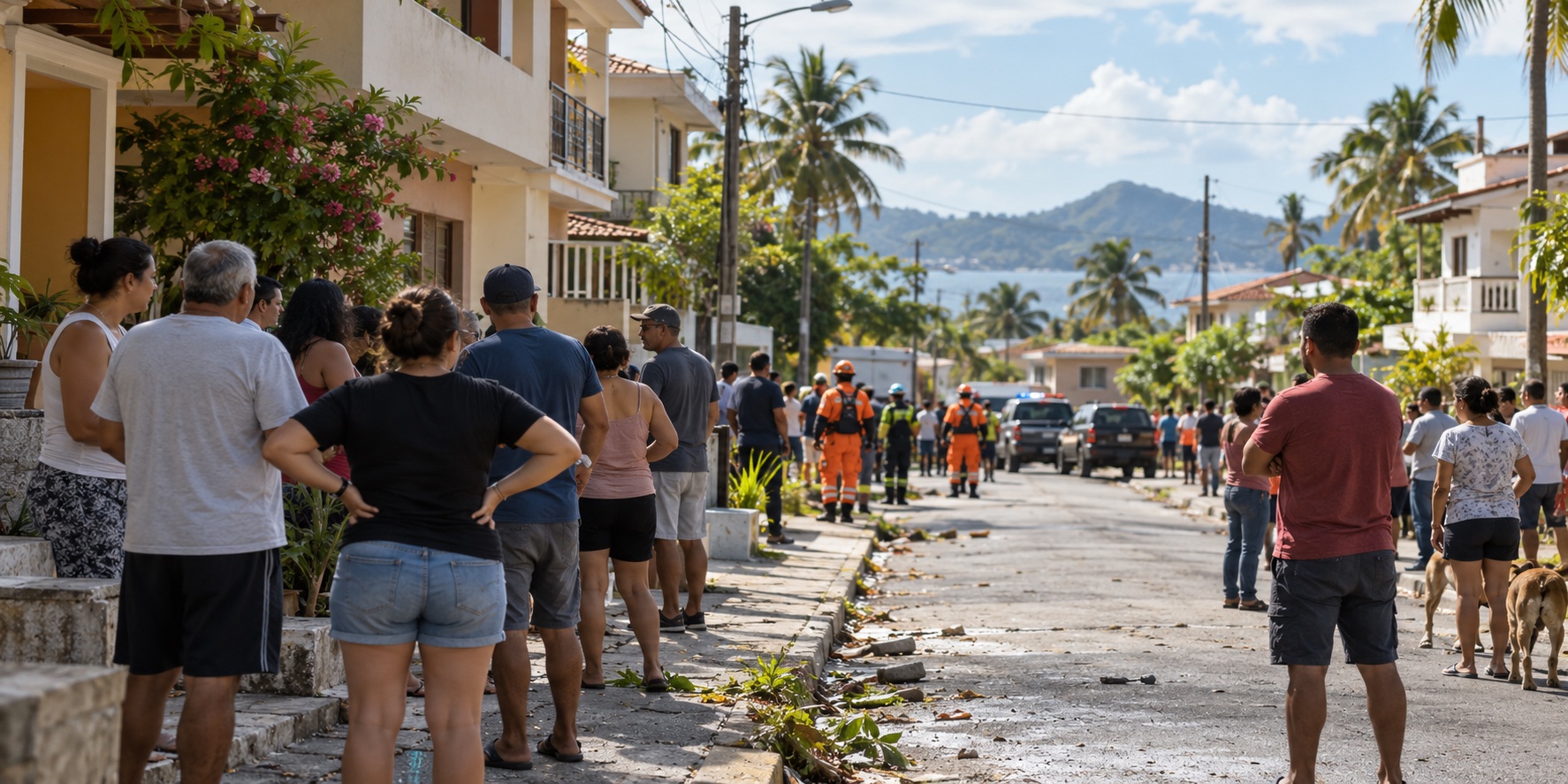
PANAMA, October 9, 2026 — A powerful earthquake struck Panama on Friday, shaking communities across the country, prompting evacuations and bringing reports of buildings collapsing near the epicentral area.
Authorities and international monitoring agencies were still assessing conditions in the hours after the event. The situation remains fluid, and Panama Now Online is publishing only information that has been reported by official monitoring agencies or established news organizations.
What is known so far
The U.S. Geological Survey event page lists a reviewed M8.0 earthquake at 17:56:08 UTC on October 9, located about 14 kilometers southwest of Pitaloza Arriba, Panama. The USGS entry lists coordinates of 7.540°N, 80.750°W and a depth of 33 kilometers.
Initial earthquake measurements can change as agencies process additional seismic data. The Associated Press reported that USGS initially described the event as magnitude 8.0 before revising early estimates to 7.6 and then 7.7. Its report also described the epicenter as roughly 10 kilometers southwest of Pitaloza Arriba and cited a different early depth estimate. Those differences reflect the evolving nature of rapid seismic assessments; readers should treat the official event page and Panamanian authorities’ updates as the primary reference as the analysis continues.
The shaking was felt in Panama City and in other parts of the country, according to AP, and was also reported as far away as neighboring Colombia. Residents in the capital gathered outside buildings as they waited for information about the earthquake’s impact.
Damage, evacuations and initial reports
AP reported that buildings collapsed near the epicenter and that evacuations took place across Panama. At the time of its report, no casualties had been immediately reported. That does not rule out later changes: damage and casualty assessments often take time, particularly in communities closer to an epicenter or in areas where communications and transport may be disrupted.
Emergency crews, local authorities and communities may be checking structures, roads, utilities and public facilities. People should avoid entering visibly damaged buildings until they have been assessed by qualified personnel. Anyone who smells gas, sees damaged electrical lines or notices cracks, fallen masonry or unstable walls should move to a safe location and report the hazard through official emergency channels.
Aftershocks remain a risk
AP reported multiple aftershocks after the main event, including earthquakes measured at magnitudes 5.8 and 5.5 in early reports. Aftershocks can occur minutes, hours or days after a large earthquake and can be strong enough to cause further damage to weakened structures.
Residents are urged to remain alert. If another tremor occurs, move away from windows, shelves and objects that can fall. If indoors, follow established earthquake-safety procedures and do not rush through damaged stairwells or use elevators. Once shaking stops, evacuate only when it is safe to do so and follow the directions of emergency responders and building managers.
Coastal and tsunami information
The Pacific Tsunami Warning Center issued an initial threat message after the earthquake, saying that hazardous tsunami waves were possible along some coasts in Panama and other countries in the region. The center emphasized that its message supports national authorities, and that national and local authorities determine the appropriate alert level and any public instructions for their territory.
Coastal residents and visitors should not rely on social-media posts, rumors or outdated screenshots. Follow instructions from Panama’s official emergency-management agencies and local authorities. If officials issue an evacuation or coastal-safety order, act immediately and move to the indicated safe area. Do not return to beaches, ports or low-lying coastal areas until authorities say it is safe.
What people should do now
- Stay alert for aftershocks and keep clear of damaged buildings, walls and utility lines.
- Check on family members, neighbors, older adults and people who may need assistance—only when it is safe to do so.
- Use phones for urgent communication and keep official alerts available.
- Do not spread unverified casualty figures, evacuation orders or tsunami claims.
- Follow instructions from SINAPROC, police, firefighters, local governments and other official emergency authorities.
- If you are in a coastal area, monitor official guidance closely and leave promptly if an evacuation order is issued.
A developing national emergency
The earthquake is among the strongest to affect Panama in recent history. For now, the priority is safety: giving emergency teams space to work, protecting people from aftershocks and ensuring that public information comes from verified channels. Panama Now Online will update this report as authorities provide confirmed information on damage, affected communities, transport, utilities, injuries and any emergency measures.
This article was expanded at 8:20 p.m. Panama time on October 9, 2026. Magnitude, depth, damage and alert information may be updated as official assessments continue.