
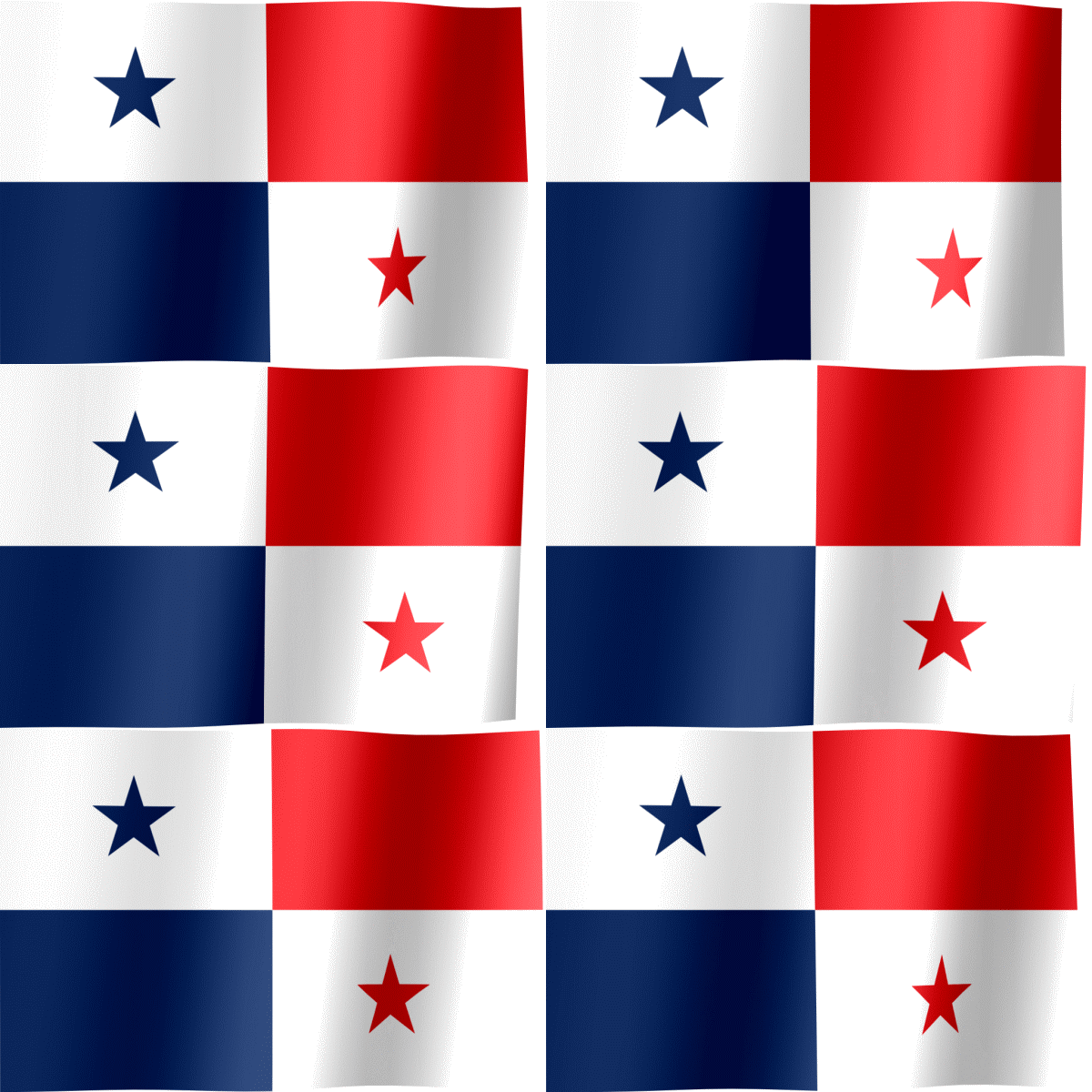

Panama Begins Care Assessments to Expand Access to Social Services

PANAMA CITY, July 15, 2026 – Panama is implementing care assessments designed to improve equitable access to public and social services, according to a report published Wednesday by the Inter-American Development Bank.
The initiative places care needs at the center of public-service planning, a shift that could affect families, older residents, people with disabilities, caregivers and communities that have historically faced uneven access to state support.
The IDB report, published on July 15, frames the assessments as a tool for making access to services more equitable. The core idea is straightforward: before governments can distribute care resources fairly, they need a clearer picture of who needs support, where the gaps are and what type of assistance is most urgent.
For Panama, the effort lands at a time when the country continues to balance strong service-sector growth with persistent social inequality. The country’s modern logistics, finance and tourism economy often moves faster than the public systems that support vulnerable households outside the most visible business corridors.
Care assessments can also help policymakers distinguish between short-term assistance and long-term structural demand. In practical terms, that means identifying whether a household needs immediate support, sustained caregiver relief, better health connections, disability services, or coordination across several agencies.
The success of the program will depend on implementation. A national assessment system is only useful if information reaches decision-makers, frontline workers are trained to use it, and residents trust that providing data will lead to real help rather than another layer of paperwork.
What happens next
Authorities and partner agencies are expected to face the harder work after assessment begins: turning collected information into funded services, local follow-through and measurable improvements for families who need support.