


My boy Raul “fingerpops” the corrupt Benicio Robinson. Don’t “F – – k” with our glorious reefs.

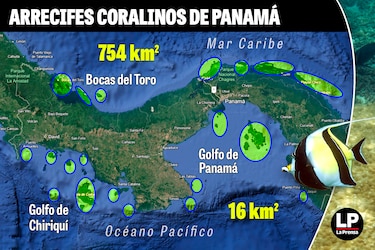
With an objection based on inconvenience and unconstitutionality , President José Raúl Mulino halted Bill 571, promoted by the deputy of the Democratic Revolutionary Party (PRD), Benicio Robinson, which sought to modify the legislation that protects the coral reefs of Panama.
https://www.prensa.com/sociedad/mulino-veta-reforma-de-benicio-robinson-que-debilitaba-la-proteccion-de-los-arrecifes/
Coiba, mining and reefs: The shift in Juan Carlos Navarro’s environmental discourseReef protection at stake: Will Mulino veto Benicio Robinson’s project?
The initiative, approved by the National Assembly, proposed to modify Law 304 of 2022 , considered the main legal instrument for the conservation of coral reefs and associated marine-coastal ecosystems.
The Executive’s decision, formalized on June 12, 2026, was based on a technical analysis prepared with the support of the Ministry of Environment, the Aquatic Resources Authority of Panama (ARAP), the National Secretariat of Science, Technology and Innovation (Senacyt), and the Coiba Scientific Station. The document concludes that the proposed reforms would reduce the current level of environmental protection and pose a risk to the country’s marine biodiversity.
The concerns
Among the main concerns raised by the Presidency is the change in the protection regime for seagrass beds. While current legislation generally prohibits construction or modification activities in these ecosystems, the reform opened the door to authorizing them through administrative permits, a change that, according to the Executive branch, significantly relaxed existing restrictions.
The government analysis warns that the project did not establish technical criteria, limits, or legal parameters for granting these authorizations. This lack of clear rules would leave the Ministry of the Environment with a wide margin of discretion, which, in the Executive’s view, could lead to inconsistent decisions and less legal certainty for the conservation of marine ecosystems.
Another point of contention was the inclusion of the concept of “direct damage” to determine the impact on coral reefs. The Presidency maintains that this term lacks a legal definition in current legislation and could hinder the application of sanctions, as it would require demonstrating an immediate causal link, even though many environmental impacts occur cumulatively or manifest themselves years later.
https://www.instagram.com/p/Dah700dFUvG/embed/captioned/?cr=1&v=14&wp=540&rd=https%3A%2F%2Fwww.prensa.com&rp=%2Fsociedad%2Fmulino-veta-reforma-de-benicio-robinson-que-debilitaba-la-proteccion-de-los-arrecifes%2F#%7B%22ci%22%3A1%2C%22os%22%3A3190.5%2C%22ls%22%3A684.1000003814697%2C%22le%22%3A1457.6999998092651%7D
Associated ecosystems
The presidential objection also points out a significant omission in the text approved by the Assembly: the exclusion of associated ecosystems, such as mangroves, wetlands, and coral reefs. Unlike Law 304 of 2022, which recognizes the interdependence between these habitats and coral reefs, the reform limited protection solely to the latter, leaving part of the environment that guarantees their survival without legal coverage.
 You might be interested in:PASE-U: Ifarhu explains how to download the application to access the benefit
From a constitutional perspective, the Executive Branch maintains that Bill 571 violates the Environmental Regime established in the Constitution. The document points out that Articles 118 through 121 obligate the State to guarantee a healthy environment, prevent environmental degradation, and protect natural resources—principles that, according to the official analysis, would be weakened by the proposed modifications.
The Presidency also found a contradiction between the rhetoric surrounding the initiative and the content of the reform. Although proponents claimed the objective was to strengthen the monitoring and protection of coral reefs, the text replaced several prohibitions with a system of administrative authorizations that, according to the Executive branch, reduced the safeguards established in current legislation.
In its objection, the Executive Branch described the proposal as a regressive measure in environmental policy. In its view, the bill not only lowered the protection standards achieved in 2022, but also deviated from the principles of conservation, restoration, and sustainable use that guide the management of marine and coastal ecosystems in Panama.
With the return of Bill 571 to the National Assembly, the Government made it clear that any modification to environmental regulations must strengthen, and not weaken, the legal tools intended to protect coral reefs and marine ecosystems.